
Locust Pose
Salabhasana
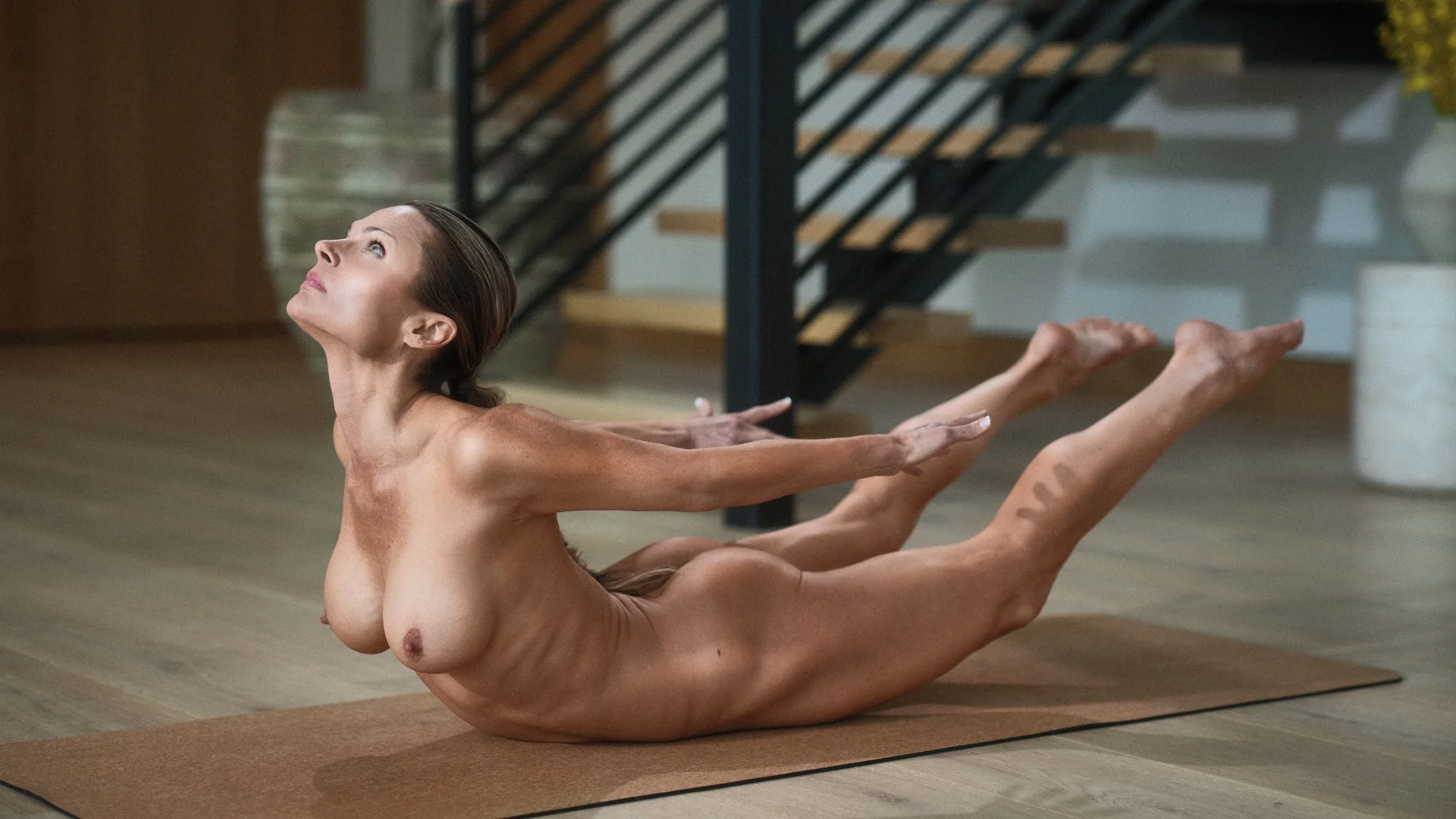
Teacher: Jessica
Locust Pose aka Salabhasana builds deep muscular strength, opens the heart, and establishes the essential foundation for deeper spinal extensions.
Common Name: Locust Pose
Sanskrit Name: Salabhasana (sha-la-BAHS-ah-nah)
Level: Beginner, Intermediate
Pose Type: Prone, Backbend. Chest Opener
Target Areas: Lower Back, Spine, Glutes, Hip Flexors, Chest, Shoulders
Locust Pose (Salabhasana) is an empowering prone backbend that invites deep body awareness and physical grounding while building essential strength along the entire posterior chain—from the upper back down through the glutes and legs. Derived from the Sanskrit word salabha, meaning "grasshopper" or "locust," the posture reflects the visual image of an insect perched and ready to spring forward.
Unlike backbends that rely on leverage from the hands or arms, Locust Pose uses pure muscular strength to actively lift the torso and legs against gravity, strengthening the entire backside of the body without placing pressure on the wrists or weight-bearing joints. In addition to improving posture and counteracting the effects of long hours of sitting, this posture stimulates and tones the abdominal organs, improves spinal mobility, and serves as ideal preparation for deeper backbends like Bow Pose and Wheel Pose.
Locust Pose Steps
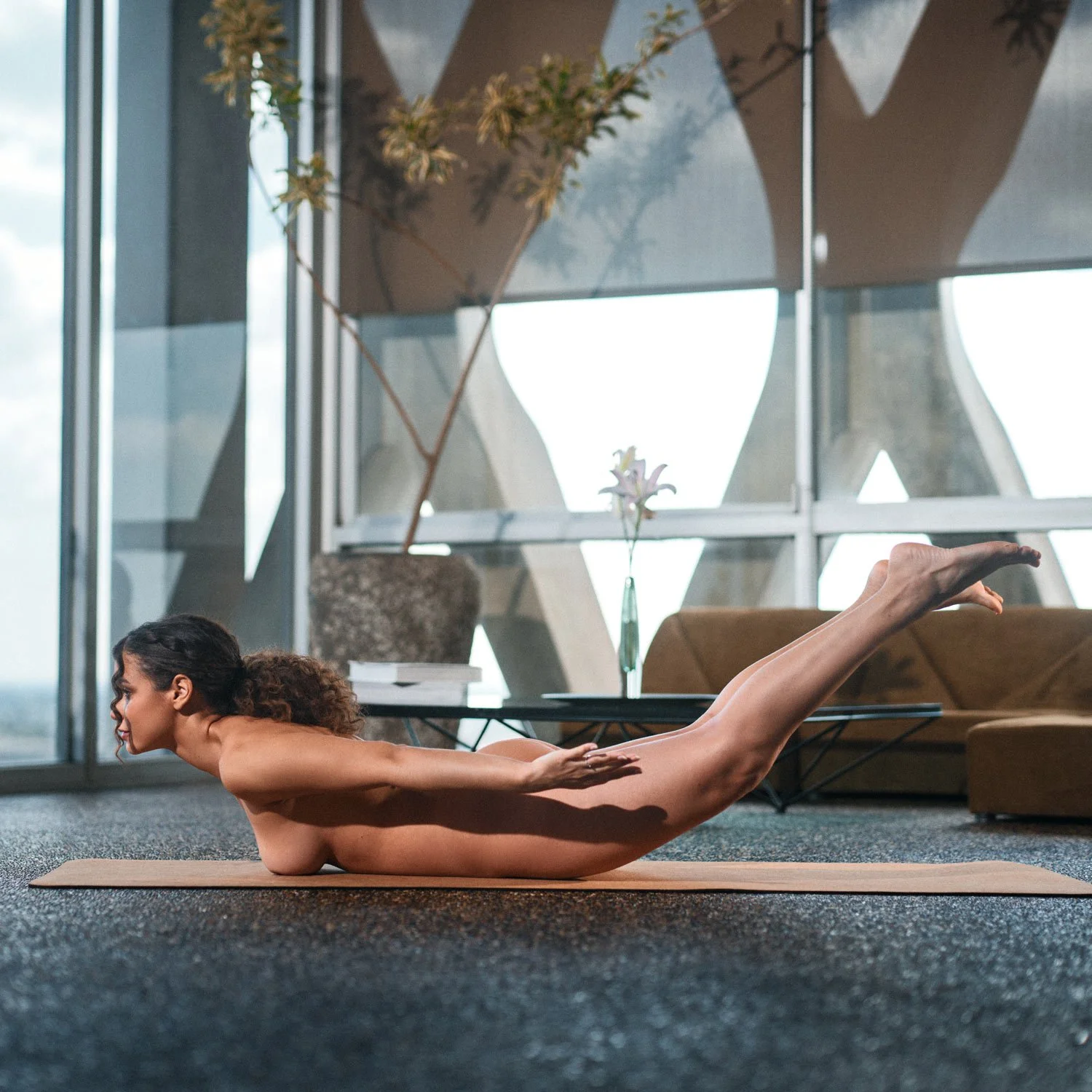
Teacher: Indi
STEP 1
Lie face down on your mat with your legs extended, feet together, and arms resting alongside your torso with palms facing down.
STEP 2
Rest your forehead lightly on the mat, roll your shoulders away from your ears, and press the tops of your feet into the floor.
STEP 3
Exhale completely, then draw your belly button toward your spine to engage your deep core and protect your lower back.
STEP 4
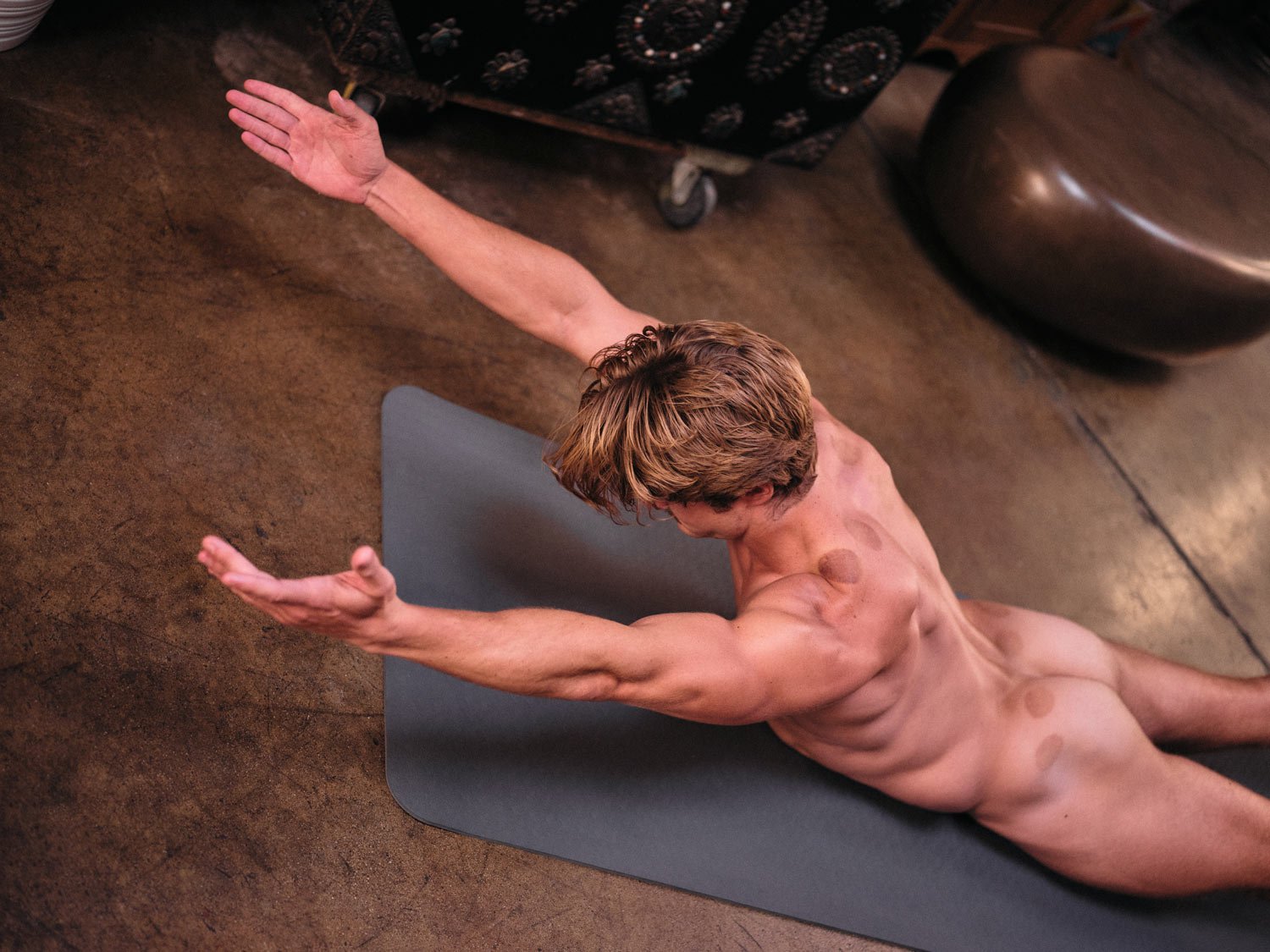
Teacher: David
Inhale deeply as you lift your head, upper chest, and arms off the floor, keeping your collarbones broad.
Step 5
Simultaneously lift your legs off the mat, engaging your glutes, hamstrings, and inner thighs while reaching active toes toward the back of the room.
Step 6
Reach your fingertips back toward your heels, maintaining a long, even arch along your entire spine.
Step 7
Breathe steadily through your nose for 3 to 5 full breaths, keeping your gaze directed slightly downward to keep the back of your neck long.
Step 8
Gently exhale as you lower your chest, arms, and legs back down to the floor, turning your head to one side to rest.
Modifications
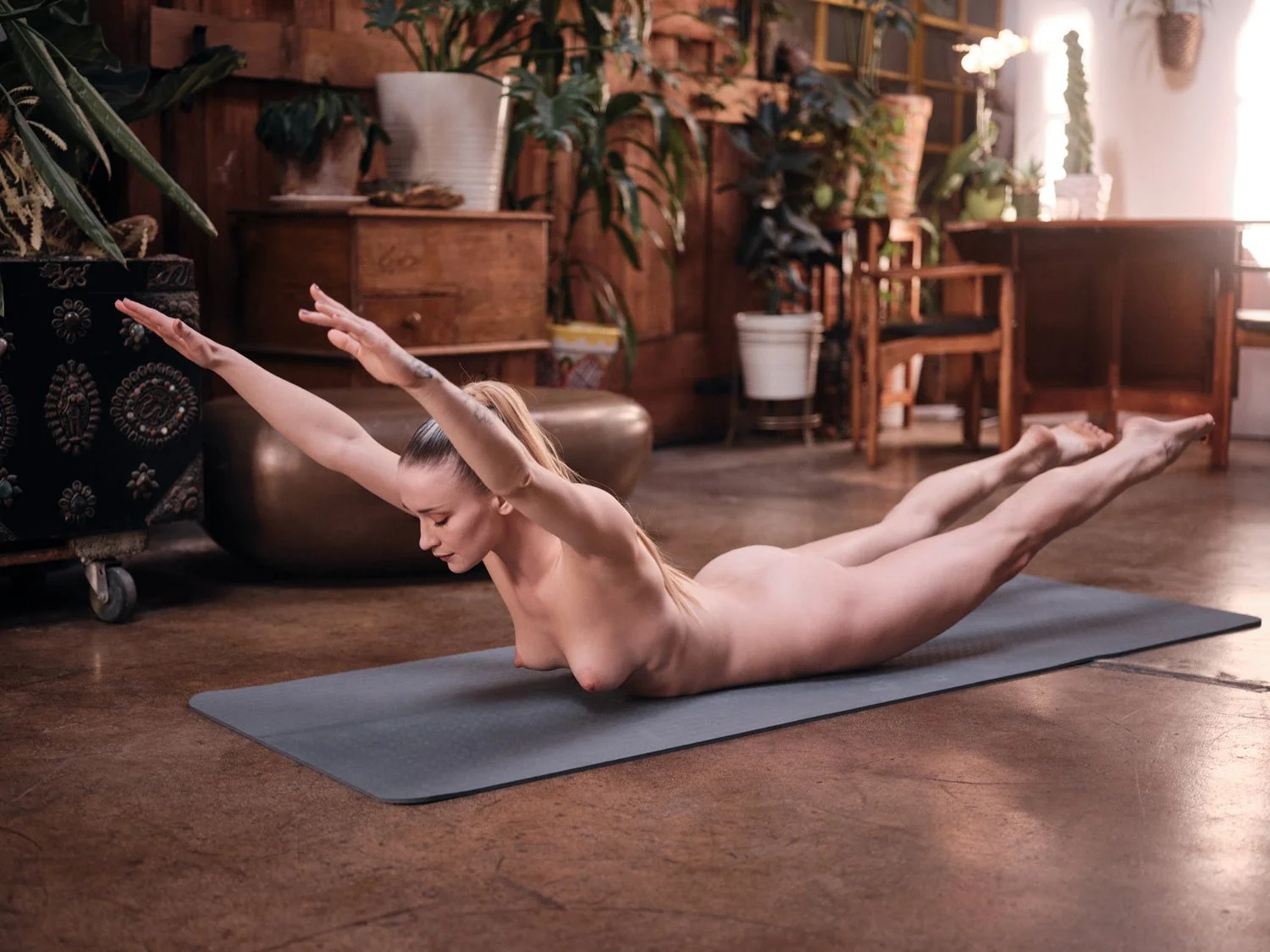
Advanced version of Locust Pose with arms extended | Teacher: Chloe
Hand Support (Easier): Keep your fingertips or palms lightly touching the floor beside your hips to assist with the lift.
Half Locust (Easier): Lift only your upper body or only one leg at a time to build back strength gradually.
Block Between Thighs (Alignment): Squeeze a yoga block between your inner thighs while lifting to engage the legs properly, protect the lower back, and maintain hip alignment.
Interlaced Hands (Advanced): Interlace your fingers behind your back and extend your arms backward to intensify the chest, shoulder, and front-body stretch.
Arms Extended Ahead (Advanced): Reach both arms straight forward alongside your ears, creating maximum leverage and an intense core challenge.
Benefits
• Strengthens the spine, glutes, hamstrings, and upper back muscles.
• Opens the chest, shoulders, and front body.
• Improves posture by counteracting long hours of sitting.
• Stimulates abdominal organs, aids digestion, and enhances core awareness.
• Increases stamina, physical endurance, and full-body synergy.
Cautions
• Pregnancy, especially when pressure on the abdomen causes discomfort.
• Recent or severe back injuries, spinal conditions, or recent abdominal surgery.
• Neck pain or neck injuries (keep gaze directed down toward the mat).
• Uncontrolled high blood pressure, headaches, or migraines.